These 5 tips will help you optimize your next Sheet Metal project to reduce costs and maximize your efficiency.
Sheet metal is an ideal material for creating durable parts, from single prototypes to high-volume production runs. Sheet metal has many commercial applications and can be a cost-effective way to create your parts. However, because sheet metal parts are made from a single, flat sheet, there are additional design considerations compared to other machining processes.
To help you save time and money, here are 5 tips you can use on your next project:
1. Choose the appropriate material
Material cost is one of the most significant drivers of part costs. Be sure to choose your material carefully and use stock sizes. If you are prototyping, consider using Aluminum 5052 versus 304 stainless steel or other less expensive material.
2. Design to a common gauge
When designing your part, remember to use standard sheet metal gauges. Know your machine limits and maximum of thickness your machines are able to use, but this constraint mainly depends on the geometry of the part. Thicker metals may restrict what bends are achievable for your part.
3. Simplify your bends
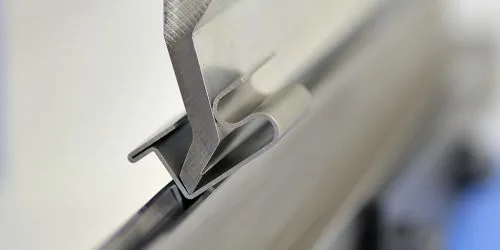
In general, the more complicated your part is, the more expensive it will be. To cut down on your costs, design for simple angled bends, with a radius equal to or greater than the thickness of the sheet. Small bends on large, thick parts tend to become inaccurate, so they should be avoided if possible.
4. Limit the use of tight tolerances
Typically, only a few surfaces of a part are critical to its function. The more features with tolerance callouts in the design (e.g., radii, hole diameters, and distances), the more expensive a part becomes to manufacture. In order to eliminate unnecessary costs, the key is to only assign tolerances to mission critical features and surfaces.
5. Maintain uniform bend orientation
Bends in the same plane should be designed in the same direction to avoid part reorientation, which will save both money and time. Keeping a consistent bend radius will also make parts more cost-effective.
IMA Information
Sheet metal fabrication always brings many challenges to manufacturer. Cost efficiency should be achieved with a proven and reliable equipment, which allows manipulating with bends and thicknesses, staying error-free and saving manufacturing time in many different ways.
If the time has come to upgrade or enhance your production capabilities, you can also get a new press brake from a reliable Italian manufacturer. Our catalog’s range of press brakes from our members can satisfy needs of any manufacturing, from a small job shop to an automated multi-tasking plant.